
Driving in California
Police, Sheriff, or CHP? A Southern California Driver’s Guide
The flashing lights may look familiar, but the agency behind them matters—especially if you need a crash report later.

Driving in Southern California
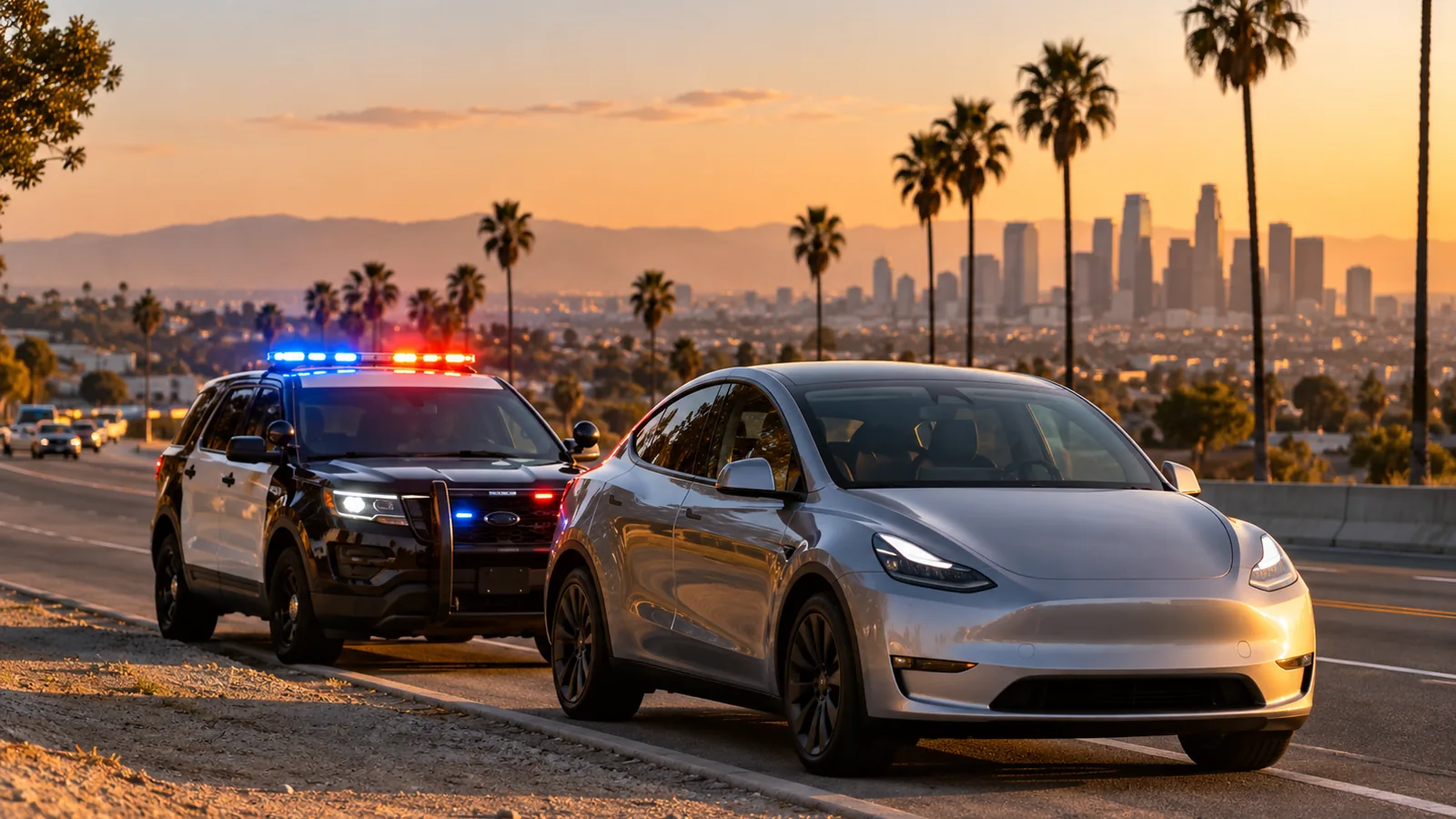
Pull over safely. Then note the agency.
You’re driving through Southern California when red-and-blue lights appear in your rearview mirror. You pull over, speak with the officer, and eventually get back on the road.
Most of us would call that “getting pulled over by the police.” Fair enough. But if you’re later looking for a collision report or trying to track down a towed vehicle, that description may not get you very far.
The detail worth remembering is which agency handled the incident.
Four names you’re likely to see on the road
LAPD — Los Angeles Police Department. Primarily responsible for policing the City of Los Angeles. The city and Los Angeles County are not the same thing.
LASD — Los Angeles County Sheriff’s Department. Serves many unincorporated areas of the county and provides police services to cities that contract with the Sheriff’s Department. A city doesn’t necessarily have its own city police department.
CHP — California Highway Patrol. A familiar sight on California freeways, including I-5, I-10 and I-405. CHP also handles traffic enforcement and collisions on other roads and in areas within its responsibilities. It is not limited to freeways.
City police departments. Anaheim, Riverside and Irvine, for example, have their own police departments. Orange County also has its own Sheriff’s Department, which serves designated areas and contract cities.
These descriptions tell you where an agency commonly works, not a hard boundary for every officer or incident. Agencies can assist one another, and officers have law-enforcement authority beyond the streets they routinely patrol. If you need records later, go by the agency that actually issued the citation or investigated the crash, rather than guessing from the city you were in.
The lights come on. What should you do?
Safety first; the agency trivia can wait.
Signal right to acknowledge the officer. Check traffic and move safely to the right shoulder or another safe stopping location. That includes safely moving out of an HOV or carpool lane. Avoid sudden braking or stopping in a live traffic lane; when possible at night, choose a well-lit spot.
Once stopped, turn down the music, roll down your window and stay in the vehicle unless instructed otherwise. Keep your hands visible. If your license or registration is in a bag or glove box, wait until the officer asks before reaching for it.
And don’t worry about taking a photo of the patrol car while the stop is happening. You can record the important details when it’s safe to do so.
The small details that save a lot of trouble later
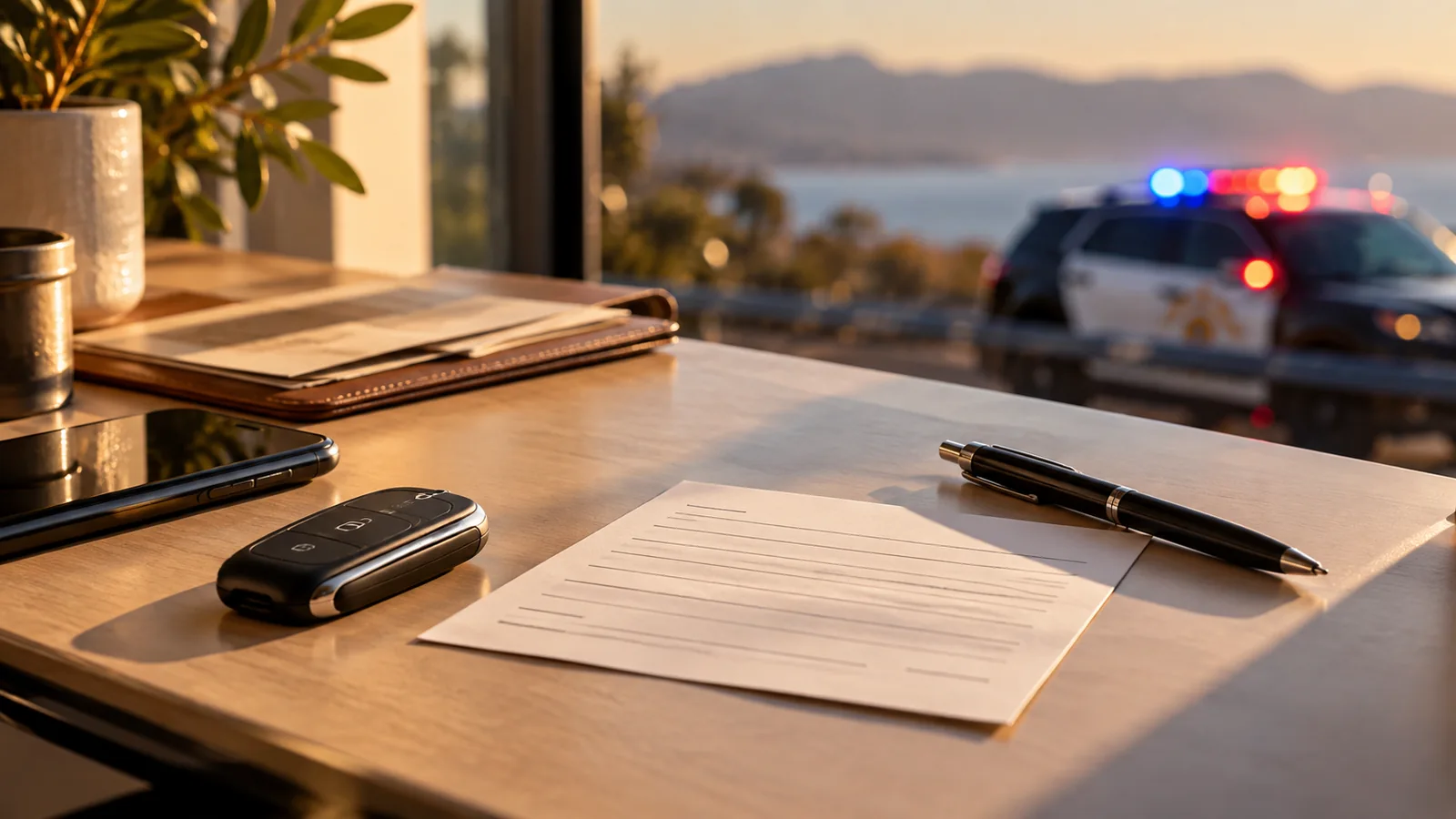
Not every traffic stop results in a written collision report. But when an officer investigates a crash or hands you paperwork, save more than just a number:
- Agency: CHP, LAPD, LASD or the exact city police department. A station or CHP Area Office can also help.
- Report, incident or case number: Ask what the number refers to and whether a collision report has been opened.
- Officer’s name and badge or ID number: Keep these with any card or document you receive.
- Date, time and location: Include direction of travel, freeway exit or nearest intersection when relevant.
- Citation number, if any: A ticket number is not the same as a collision-report number.
A useful question is: “Which agency is handling this, and is there a collision report number I should keep?”
Once it’s safe, take a picture of the paperwork or save the details in your phone. A report number without the agency name is easy to misplace in the wrong system.
Need the collision report afterward? Start with the agency.
For a collision investigated by CHP, see its official collision report / CHP 190 instructions and Traffic page. Eligible involved parties and authorized representatives can request copies using CHP’s current procedures.
For a report handled by LAPD, follow the department’s Traffic Collision Report request instructions. LAPD asks for a DR number or incident number if available, along with details such as the date and location.
For LASD, consult its Records FAQ or the relevant Sheriff’s station. For another city, use that city police department’s official Records or Traffic Collision Report page.
Reports may take time to become available, and eligibility and fees can apply. An incident number does not necessarily mean a completed collision report is ready. Conversely, if you lost the number, the investigating agency may still be able to help locate the record using other details.
A ticket, a crash report and a DMV SR-1 are not interchangeable
A traffic citation tells you what court or process to follow. Look at the actual Notice to Appear rather than assuming you pay the police department. The California Courts traffic FAQ explains how to find the court named on the ticket.
A collision report is the investigating agency’s record of a crash.
A DMV SR-1 is a separate California reporting requirement. Under DMV guidance, drivers generally must submit an SR-1 within 10 days if anyone is injured or killed, or if property damage exceeds $1,000, regardless of fault. A police report or insurance claim does not replace that filing. DMV guidance also says an injury or fatal collision must be reported to law enforcement within 24 hours. See the California Driver’s Handbook and DMV SR-1 instructions.
Driving a rental car? Add one more call.
If someone is hurt, call 911. When nobody is injured and the vehicle can be moved safely, get it out of traffic as appropriate, then exchange the required driver, registration and insurance information. Document the scene and contact your rental company promptly according to the rental agreement; don’t wait for the police report to be completed.
If the vehicle is towed, ask who arranged the tow, where the vehicle is going and which company has it. Tow records and collision reports may be held in different places.
If you’re driving with Movia, use the contact information in your rental documents so our team can help with the next steps. That does not replace emergency services or any reporting you are legally required to complete.
One last thing to remember
You don’t need to memorize every badge and jurisdiction in Southern California. You just need to know that “the police” may mean several different departments.
Pull over safely first. Once the situation is handled, keep the agency name and the correct number.
You may be glad you did when it’s time to find the report, talk with insurance or sort out a citation.
Official sources
Reviewed September 23, 2026. Agency procedures and forms can change; use the linked official pages when requesting records or filing a report.
- 1LASD: Police officers, deputies and CHP — who does what?
- 2California DMV: What to do during a law-enforcement stop
- 3California DMV: Collisions, reporting, SR-1 and insurance
- 4California DMV: Submit SR-1
- 5CHP: Request a collision report
- 6LAPD: Obtain a traffic collision report
- 7LASD: Records FAQ
- 8California Courts: Traffic citation FAQ
- 9Orange County Sheriff: Contract-city service area example
All illustrations in this article are generated editorial scenes. They do not depict a particular real incident, official department vehicle or authentic police form.