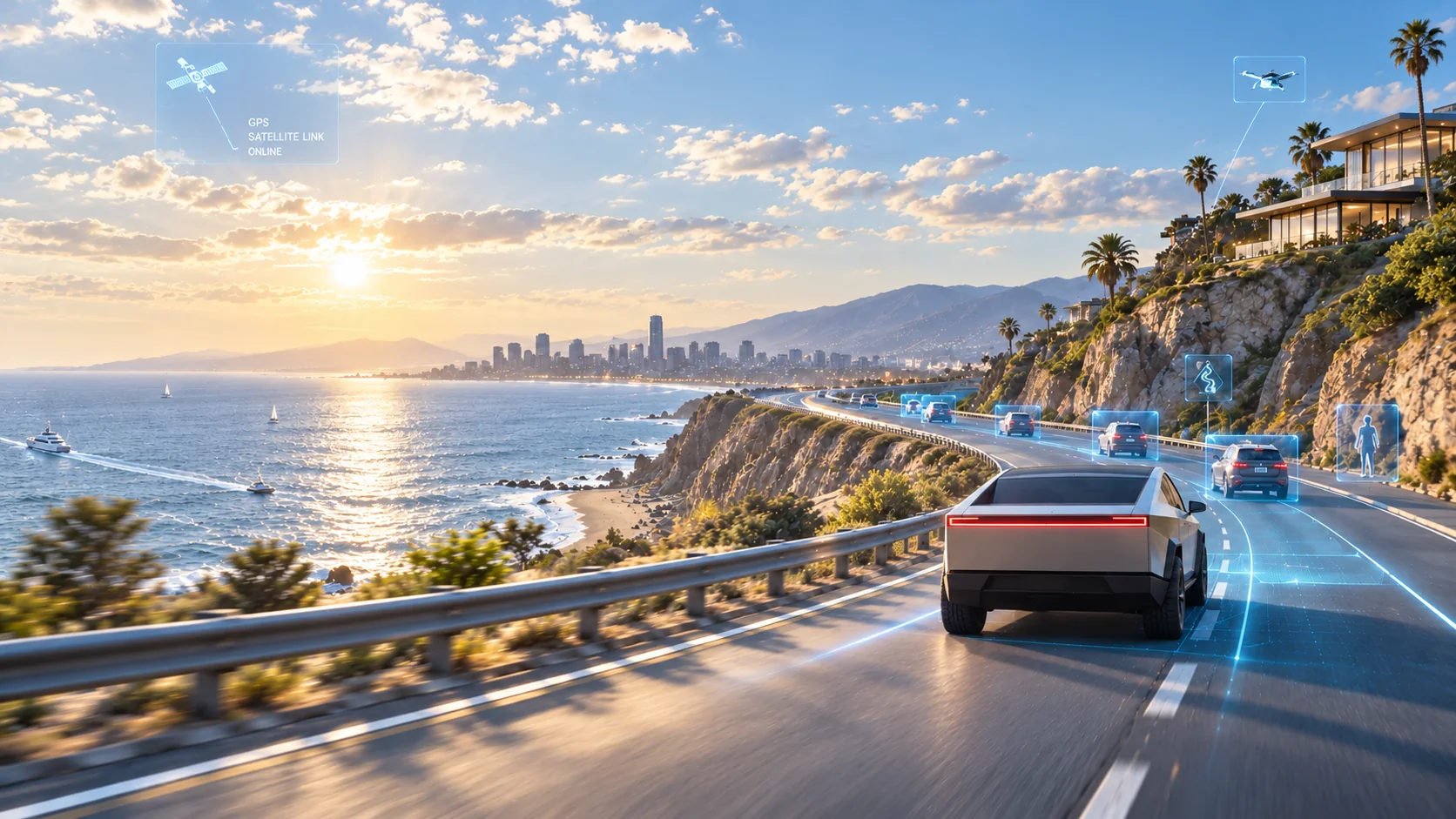

Driving in California
Pulled Over in California? Here's What to Do, from Start to Finish
Red-and-blue lights in the mirror? Here's how to pull over, handle the conversation, and deal with any paperwork afterward.

Driving in California
Stop safely first. Then take it step by step.
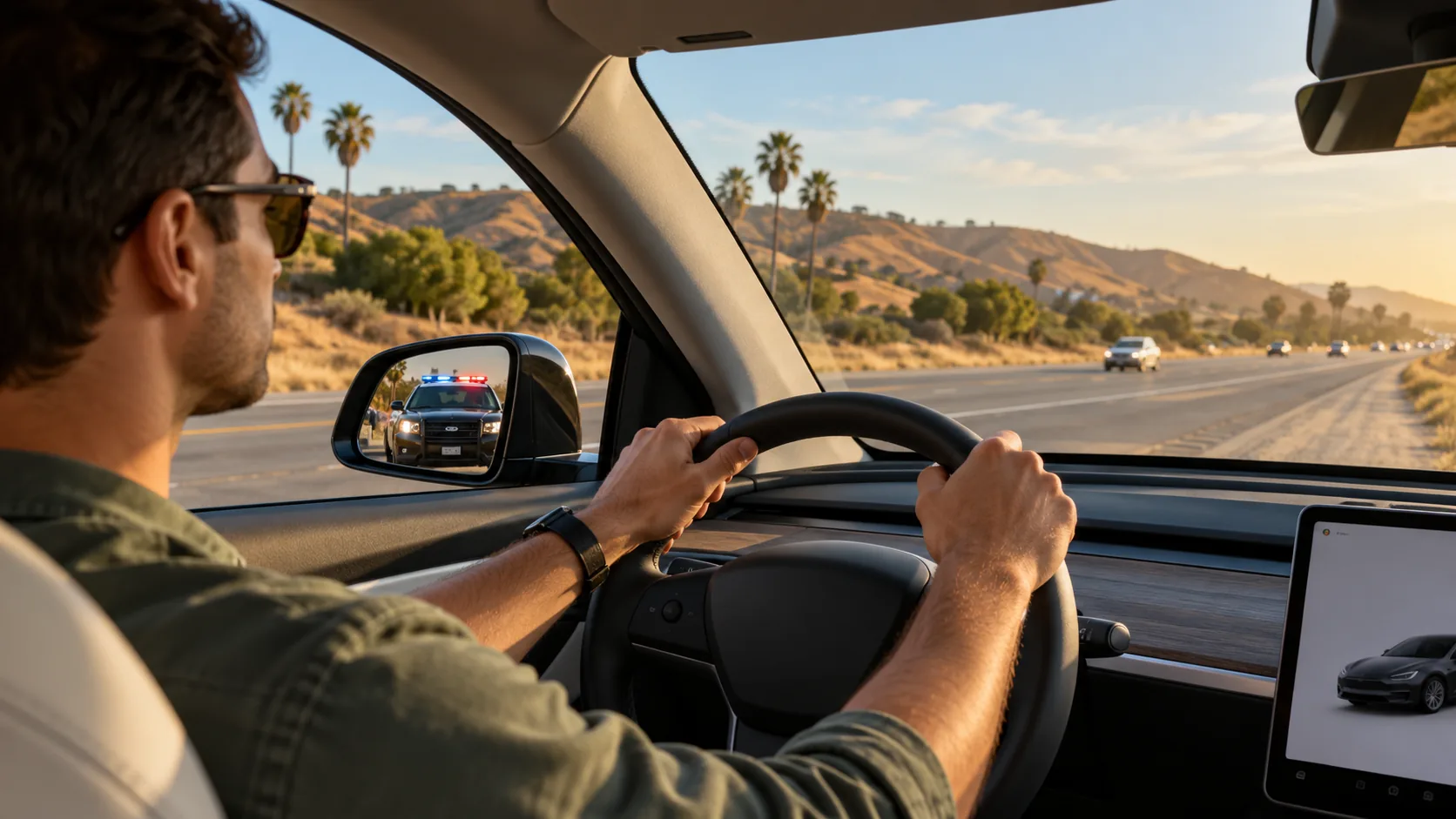
You're headed toward the coast, following directions through a new city, or making your way down the freeway. Then you notice red-and-blue lights behind you. The patrol car is still there after the next turn.
Is the officer stopping you? Where should you pull over? Should you reach for your license right away?
Here's the good news: you don't have to figure everything out at once. Your first job is simply to stop safely. The rest comes one step at a time.
The short version: Signal right, move to a safe place on the right, remain in the vehicle with your hands visible, retrieve documents when asked, and pull back into traffic only after the stop is over and the road is clear.
Are those lights for me?
A patrol car coming up behind you may be responding to something farther down the road. If it passes you, give it room and keep traffic moving safely.
But if the lights stay on and the vehicle continues behind you—or you hear a siren or a direction over the loudspeaker—treat it as an instruction to pull over.
Signal right so the officer knows you've seen them. Check your mirrors and blind spots, then move smoothly toward the right shoulder. California's Driver's Handbook says to move completely right even if you're in an HOV lane, and to choose a well-lit area when possible.
Don't slam on the brakes or stop in an active lane. Don't keep driving for miles in search of a perfect parking spot, either. Find a nearby safe place to stop promptly, and follow any directions the officer gives you.
Once you've stopped, keep things simple
Put the car in Park, turn down the music, and lower the driver's window. At night, switching on the interior light can make the cabin easier to see.
Stay in your seat unless the officer directs you to get out. Keep your hands visible, and ask your passengers to do the same.
You might be tempted to dig through your backpack before the officer gets to the window. Wait. If your wallet, registration or rental paperwork is out of reach, explain where it is before reaching for it.
A quick “My license is in my bag. May I get it?” does the job.
Driving a rental car? Have these documents ready
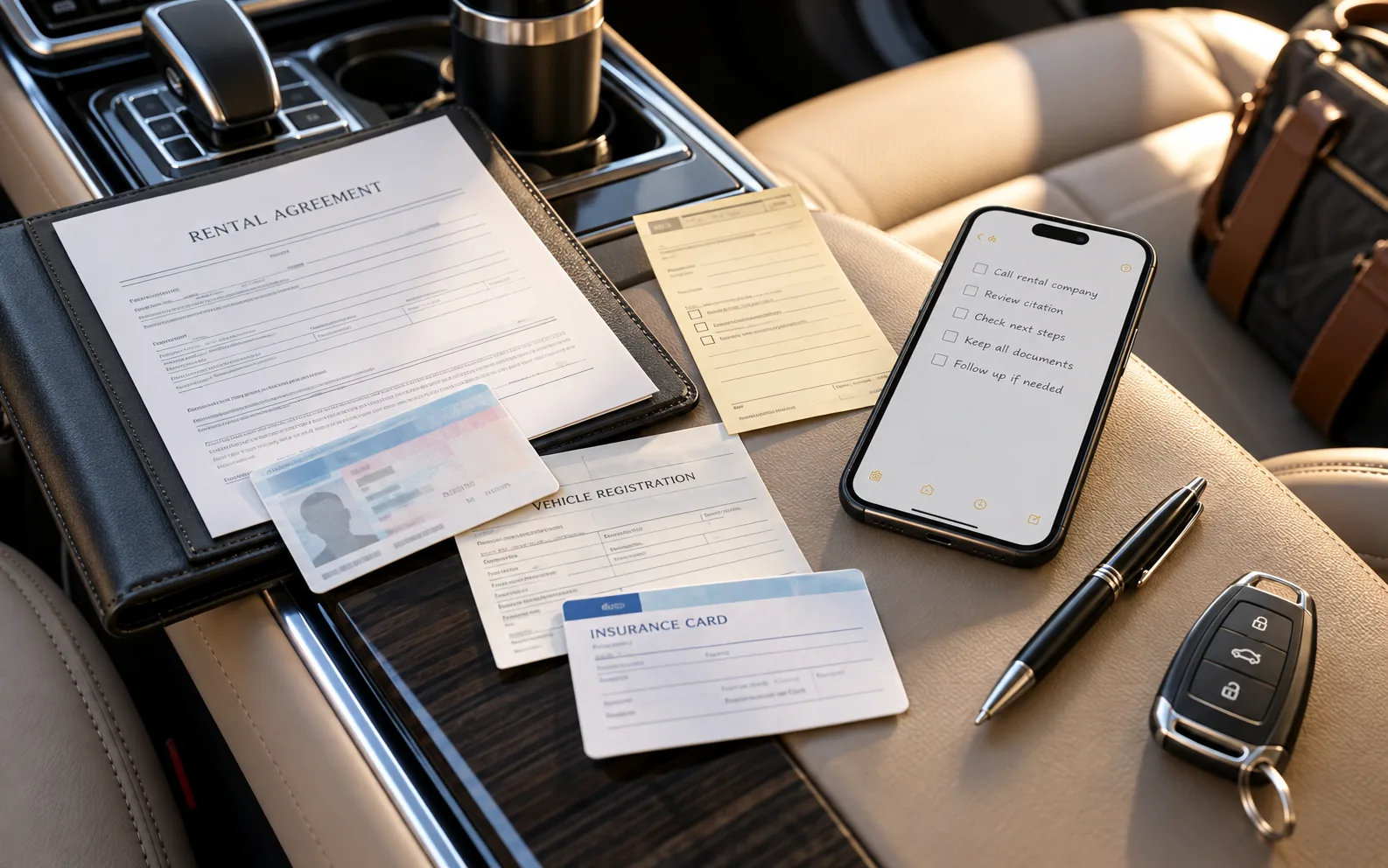
In California, a driver must present a driver's license, vehicle registration and proof of insurance or other acceptable financial responsibility when required during a law-enforcement stop.
For a rental, it also helps to have your rental agreement handy. The registration may show the rental company instead of your name, and that's expected. You can simply say, “This is a rental car. I have the rental agreement.”
Two things worth checking before you leave the pickup location: where the registration and insurance documents are kept, and how to reach the rental company if you need help finding them. The rental agreement itself isn't automatically a substitute for required insurance documentation. And a damage waiver is not the same thing as liability-insurance proof.
If your insurance information is stored on your phone, explain that you're going to open it before reaching for the device.
A few sentences that make the conversation easier
You don't need perfect English or a long explanation. Try these:
| What you need | What to say |
|---|---|
| Ask why you were stopped | “Could you tell me why you stopped me?” |
| Explain the car | “This is a rental car.” |
| Retrieve your license | “My license is in my bag. May I get it?” |
| Open the glove box | “The registration is in the glove box. May I open it?” |
| Ask the officer to slow down | “Could you please speak a little more slowly?” |
| Use translation | “May I use my phone to translate?” |
| Ask for clarification | “Sorry, could you repeat that?” |
Under the California DMV's published guidance, officers generally must tell you the reason for the stop before questioning about a traffic violation or criminal investigation, with an exception when withholding it is reasonably believed necessary to protect life or property from an imminent threat. It's fine to politely ask if you didn't understand.
Knowing your rights doesn't mean arguing on the roadside
If an officer asks for your consent to search the vehicle, you may decline consent. An officer may still have independent legal authority to search under some circumstances. Do not physically interfere or resist. California DMV explains this distinction in its official driver's handbook, linked below.
If you believe a stop or ticket was improper, keep the details and use the appropriate process afterward. Trying to resolve a disagreement in the middle of roadside traffic is rarely a useful plan.
What if FSD was on when the lights appeared?
Take over and pull over manually. Don't wait for Full Self-Driving (Supervised) to decide whether the lights are meant for you, or to choose where to stop.
Tesla's official guidance explains that you can disengage FSD (Supervised) by braking or taking over steering, with other controls available on certain vehicles. Know your rental's controls before driving. The driver remains responsible for supervising the car and responding to emergency vehicles and officers.
Got a ticket? Here's what matters afterward
For an ordinary California traffic citation, use the ticket and the court's official instructions to find out how and when to respond. You generally do not pay a traffic fine to the officer on the roadside.
Check the violation, court information, date and response deadline. Keep a copy of everything you were given. Depending on the ticket and your eligibility, options can include paying, resolving a correctable issue, asking for traffic school, or requesting a trial by the deadline.
Signing a routine Notice to Appear is generally a promise to respond, not an admission of guilt. Paying the citation later, however, usually means accepting the violation. Those are different decisions.
Don't wait indefinitely for a reminder letter. California Courts says a notice can take 30 days or longer, and you should contact the relevant court if one doesn't arrive.
One extra task for rental drivers
Save a photo of your citation or any paperwork and notify the rental company as required by your agreement. A citation handed to you is not automatically a court matter the rental company has resolved on your behalf. Any contractual administrative charges or notice-handling procedures depend on your actual rental terms.
If the stop involved a crash, prioritize everyone's safety and contact emergency services when needed. Then follow the rental company's incident instructions. For help identifying which agency investigated a collision and where to request a report, read our companion article: Police, Sheriff, or CHP? A Southern California Driver's Guide.
Before you drive away
When the officer says you're free to go, make sure you have your documents. Signal, check traffic, and merge back onto the road safely.
A traffic stop may be an unexpected detour. It doesn't have to become the defining memory of your trip.
This article focuses on California and is general driving information, not legal advice. Rules can differ in other states. Call 911 in an emergency and follow lawful directions at the scene.
Official references: California DMV — Law Enforcement Stops & Your Rights · California DMV — Insurance Requirements · California Courts — Guide to Traffic Tickets · Tesla — FSD (Supervised) · California Department of Insurance — Rental-Car Damage Waivers