

California Travel
Chasing Bioluminescence in California: Where to Look, When to Go, and Tesla Road-Trip Tips
There is no bioluminescence forecast and no beach that is guaranteed to glow. Here is where Southern California has had recent sightings, how to read red tide, darkness and surf before you drive, and how to plan a Tesla coastal route that can change halfway through dinner.

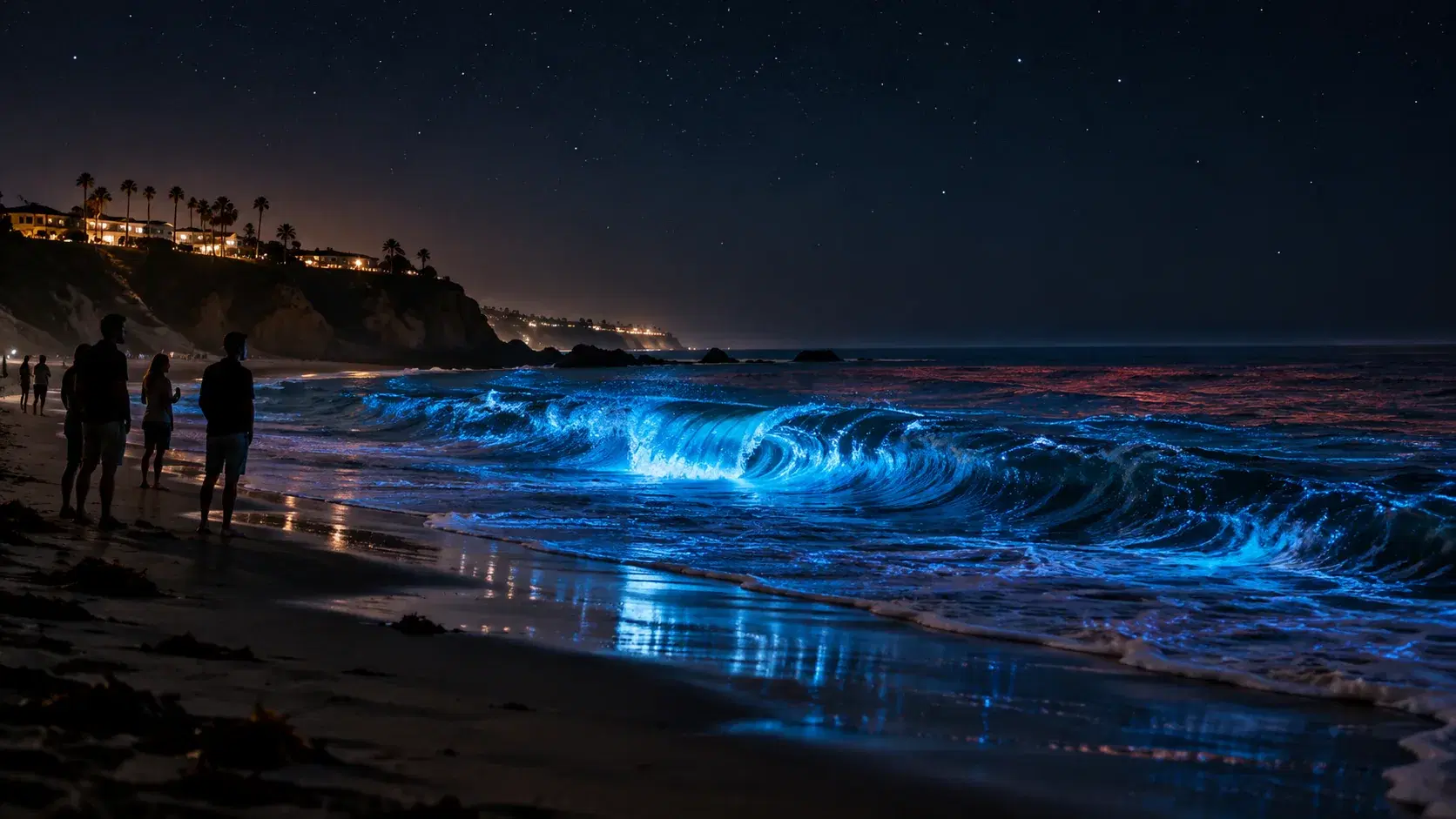
Southern California
Wait for the dark, then for the wave.
By day, it can look like an ordinary stretch of ocean.
Then the beach goes dark, a wave curls toward shore, and the water flashes electric blue.
Southern California's bioluminescent waves are one of those experiences that are hard to understand until you see them in person—and frustratingly difficult to plan around.
The first thing to know is also the most important:
There is no fixed “bioluminescence season” and no beach that is guaranteed to glow tonight.
A beach can be bright one night and quiet the next. A bloom can light up one part of San Diego while another beach a few miles away shows nothing.
That means the best way to chase the glow is not to memorize one location. It's to learn what signs to watch for and build a flexible coastal route.
And right now, in early October 2026, there is a reason to pay attention.
As of the night of October 5, local visitors reported visible bioluminescence at Ski Beach in Mission Bay, San Diego, although some said the display had been stronger the week before. A visitor who checked Torrey Pines on October 4 reported seeing no obvious glow there.
So the phenomenon is active—but patchy.
The timing is also interesting: October 10 is the new moon, which means darker nights around that date. A new moon does not create bioluminescence, but less moonlight can make a faint glow much easier to see.
01 | What Makes the Ocean Glow?
Southern California's glowing waves are usually linked to dense blooms of microscopic plankton called dinoflagellates.
During certain blooms, the water can look reddish, brownish or rusty during the day—the familiar “red tide.”
At night, some of those organisms produce a brief blue flash when the water around them is disturbed.
You may see a blue edge on a breaking wave, bright flashes in whitewater, glowing trails behind fish, or sparks where a paddle moves through calm water.
Scripps Institution of Oceanography emphasizes that these events are highly unpredictable. Conditions from spring through fall in Southern California can favor large dinoflagellate blooms, but individual events can last days, weeks or longer—and move quickly.
02 | Where Should You Look Right Now?
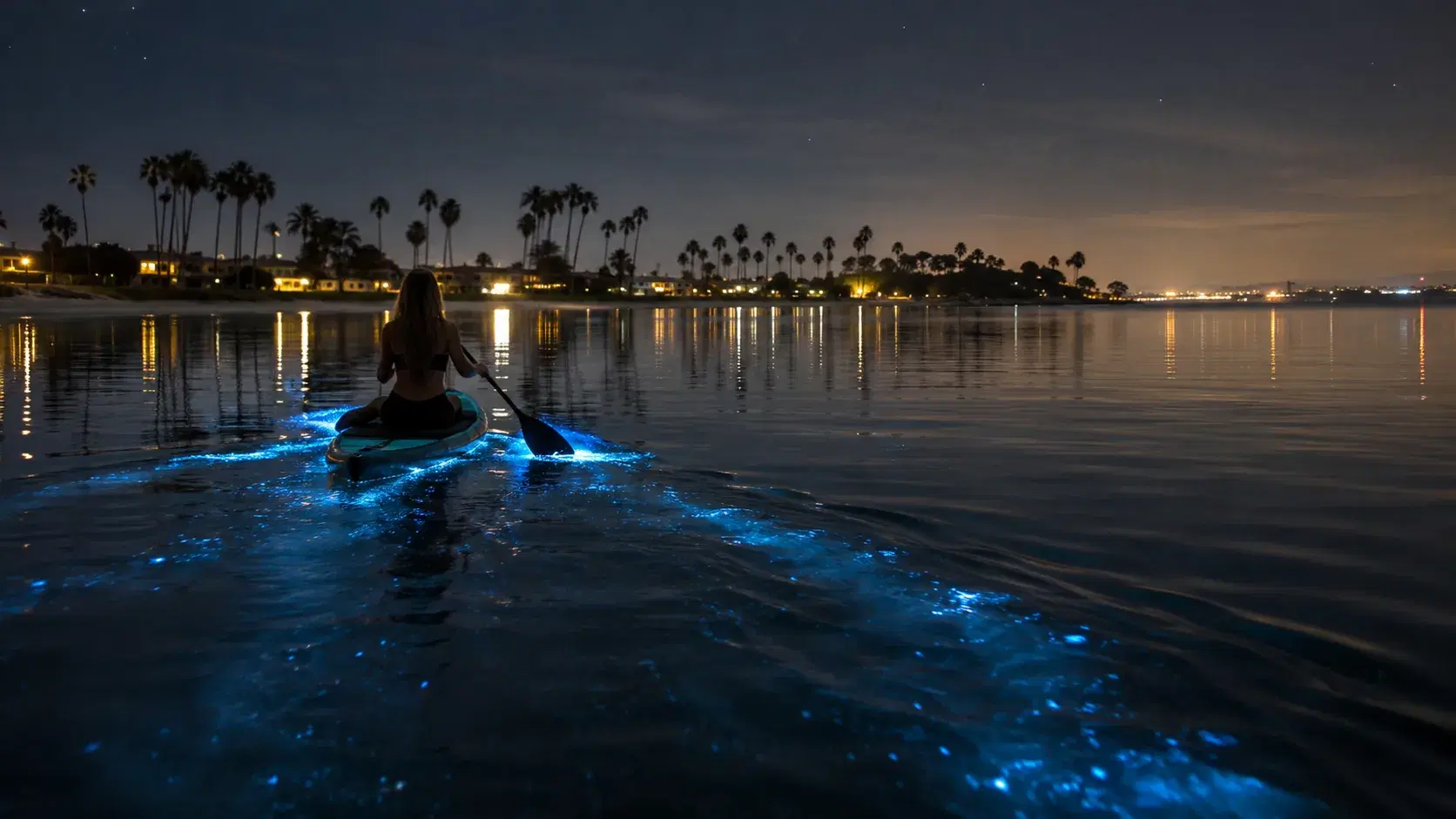
Mission Bay / Ski Beach, San Diego
For early October 2026, this is the location with the clearest very recent community report.
Visitors reported seeing bioluminescence at Ski Beach on October 5, with some comments suggesting the glow had been stronger during the previous week.
La Jolla / Torrey Pines
La Jolla and the Scripps area are classic bioluminescence locations.
But a recent report from October 4 found no visible glow at Torrey Pines, which is a good reminder that activity can be extremely localized.
Orange County: Newport, Crystal Cove and Laguna
Orange County has a long history of bright bioluminescent events.
Past sightings have included Newport Beach, Crystal Cove, Laguna Beach / Crescent Bay, Huntington Beach and San Clemente.
A flexible OC chase might look like:
Newport → Crystal Cove → Laguna Beach
Start with the location that has the freshest report. If nothing happens after a reasonable wait, decide whether it makes sense to move.
03 | How Do You Know If Tonight Is Worth the Drive?
1. Recent sightings matter most
Look for reports from the last 24–48 hours.
Reddit, local photographers, Instagram Stories and beach webcams can be more useful than an evergreen “best beaches” list.
2. Look for rusty or brown water during the day
An active bloom can sometimes discolor the ocean red, brown or rusty.
That can be a useful clue, although it is not a guarantee of a strong nighttime display.
3. Darkness helps
Scripps recommends viewing from a dark beach at least two hours after sunset.
The October 10, 2026 new moon makes the nights around it particularly dark—good viewing conditions if the bloom itself remains active.
4. Give the water something to react to
Bioluminescent plankton flash when disturbed.
At open beaches, waves do the work. In calmer bays, fish and water movement may create the flashes.
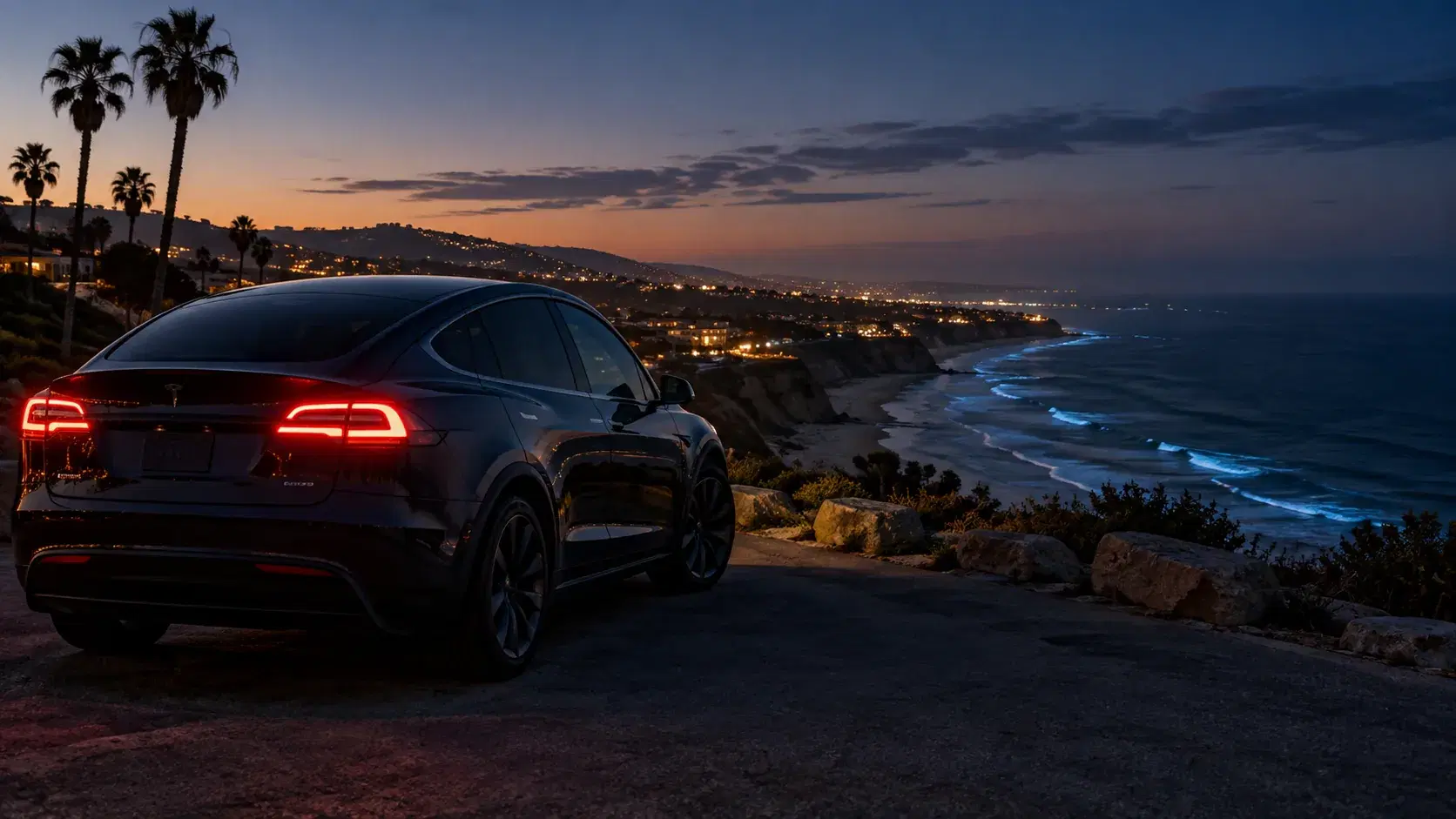
04 | Make It a Coastal Road Trip
Orange County route
Newport Beach → Crystal Cove → Laguna Beach → dinner → nighttime glow check
San Diego route
La Jolla → Mission Bay / Sunset Cliffs area → dinner → Mission Bay / Ski Beach after dark
Based on the most recent reports, Mission Bay is worth checking first right now—but keep the plan flexible.
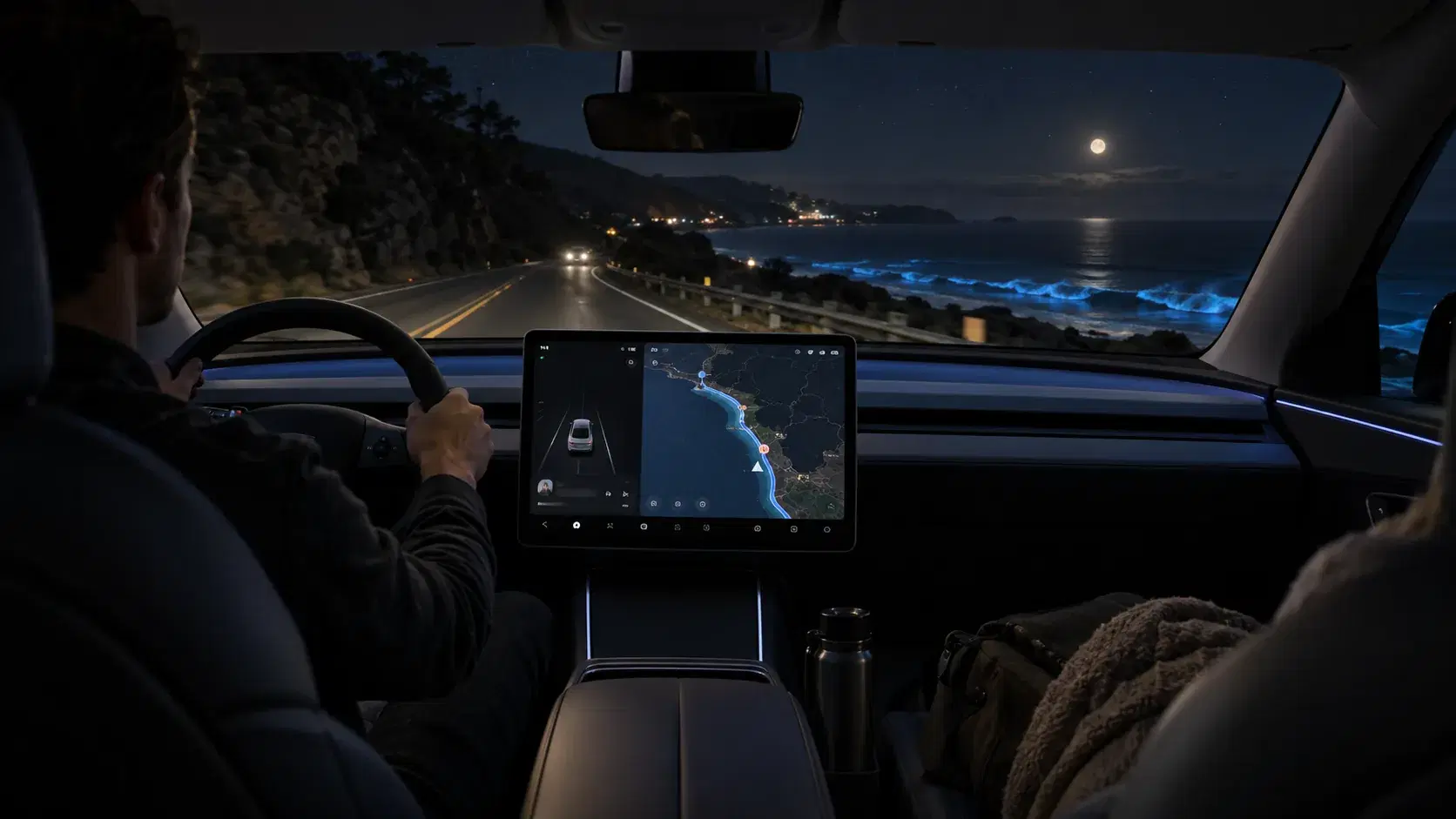
05 | Why a Tesla Works Well for a Bioluminescence Chase
This is one road trip where the destination can change halfway through dinner.
A Tesla's navigation and FSD (Supervised) can make the longer connecting drives less tiring, but there is an important distinction:
FSD (Supervised) is not “nighttime glow-chasing autopilot.”
Tesla states that FSD (Supervised) requires active driver supervision at all times. Tesla also notes that low visibility—including darkness, fog and poor weather—can significantly reduce performance.
That matters because you may encounter poorly lit coastal roads, pedestrians around beach parking, sudden roadside stops, winding streets, fog or marine moisture, and parking areas with unusual markings.
Use FSD (Supervised) normally on appropriate highways and main roads if you are comfortable doing so. Take over early when you reach dark beach roads, busy parking areas or places with lots of pedestrians.
And do not scroll through live sightings while driving.
06 | Keep Extra Battery Margin
Bioluminescence hunting has one unusual problem:
you don't always know where the night will end.
Maybe you planned to stop in Orange County and suddenly decide to continue toward San Diego.
So don't run the battery as tightly as you would on a fixed commute.
Charge before you enter “chase mode,” keep a comfortable reserve and reroute with Tesla Trip Planner if your destination changes.
07 | How to See More Once You Arrive
Turn down your phone brightness and give your eyes a few minutes to adjust.
Skip the flash. Use Night Mode or a longer exposure for photos.
And remember that social-media photos can look brighter than the scene does to the naked eye.
If there were recent sightings, give the beach 20–30 minutes before deciding nothing is happening.
08 | Should You Get in the Water?
Use some caution.
Scripps notes that many California red tides are not considered dangerous to humans, but the species involved can vary. Some blooms may cause skin or eye irritation, respiratory discomfort, or contain harmful compounds.
Stay out of the water if there is a strong odor, dead fish, a beach advisory, or if you have asthma or respiratory sensitivity.
09 | October 2026 Glow Watch
As of October 6, 2026:
- Visitors reported visible bioluminescence at Ski Beach in Mission Bay on October 5.
- Some said the glow was stronger during the previous week.
- A visitor checking Torrey Pines on October 4 reported no visible display.
- The new moon is October 10, giving Southern California darker viewing conditions over the next several nights.
- Scripps continues to stress that the exact location, intensity and duration of a bloom cannot be reliably predicted.
So if you're heading out tonight:
Check today's sightings first. Then choose your beach.
10 | The Best Part of the Chase Is That You Can't Fully Plan It
Bioluminescence is not a theme-park attraction with posted hours.
You might miss it the first night.
Then the next evening, a new report appears, you change your route, sit on a dark beach for twenty minutes—and suddenly the next wave glows blue.
Build a road trip you would enjoy anyway. Catch a sunset, grab dinner and leave a little room for luck.
Then follow the coast and see what the ocean decides to do.
More Life Between Destinations.
Sources
- Scripps Institution of Oceanography — Red Tides and Bioluminescence FAQ
- Tesla — Full Self-Driving (Supervised)
- Tesla Owner's Manual — Full Self-Driving (Supervised) Limitations
- Timeanddate — 2026 Southern California / San Diego Moon Phases